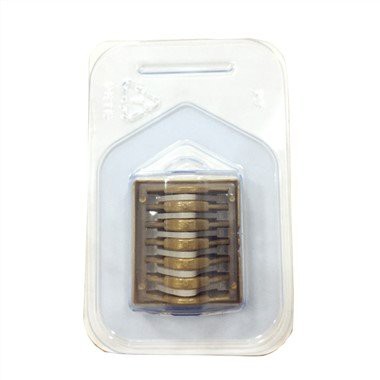
Hot Weapon For Gynecological Surgery -- Bipolar Forceps
Nov 17, 2021
Bipolar electrocoagulation came out as early as 1940. The difference between bipolar electrocoagulation and unipolar electrocoagulation is that it cancels the invalid electrode in contact with the patient's hip, and connects the two electrodes to the two blades of a pair of tweezers respectively. The two blades of the tweezers are insulated. When applied, the current only passes through the tissue between the two tips of the tweezers, so the power required is greatly reduced. Generally, it only needs 1 / 4 to 1 / 3 of unipolar electrocoagulation. With the development of electrosurgical technology, bipolar electrocoagulation is indispensable in laparoscopic surgery. Like making eggs in an egg ham sandwich, bipolar electrocoagulation forceps are an important part of laparoscopic surgical instruments. Bipolar electrocoagulation is an electronic RF current generator. The bipolar contacts well with the tissue. The current passes between the bipolar poles. Its deep condensation propagates radially, dehydrating and solidifying the blood vessels between the two ends of the bipolar, denaturing the relevant tissue and not forming an obvious arc. Since a circuit is formed between the jaws of the bipolar pliers, a negative plate is not required. Bipolar forceps basically have no cutting function, mainly coagulation function. The coagulation speed is slow, but the hemostatic effect is reliable. Because its scope of action is only limited between the two ends of the forceps, it has little damage and influence on adjacent tissues and little influence on surrounding tissues. Bipolar electrocoagulation is more accurate than unipolar electrocoagulation. It does not need to use negative plate. A circuit is formed between bipolar electrodes, the discharge area is very accurate, and the side damage is much smaller than unipolar electrocoagulation. It is more conducive to hemostasis and tissue separation. When using bipolar hemostasis, try to keep the operation field relatively dry.
Scope of application: ha ha, stop talking and stop bleeding.
Operation steps
1. Turn on the power supply, connect the foot pedal and put it under the operator's feet.
2. After power on self-test, set the output power according to the requirements of the operator and the operator.
3. Connect the bipolar electrocoagulation line plug.
4. After holding the tissue or bleeding point, step on the pedal to stop bleeding, and then release the pedal.
5. After use, first turn off the host switch and then dial the power plug.
Use skills (finally to the point)
1. Common precautions for bipolar
1. Select appropriate bipolar clamp and output power of 30-50w. According to the operation and tissue properties.
2. Keep the tissue tension free during use; Keep the operation field clean; Avoid high temperature affecting the surrounding important tissues and structures; Reduce the adhesion between tissue eschar and electrocoagulation forceps.
3. Each electrocoagulation time is within 3 seconds, which can be repeated many times until the electrocoagulation effect is achieved. Intermittent electrocoagulation is more effective than continuous electrocoagulation in preventing eschar between forceps tip and tissue.
4. Timely remove the eschar on the bipolar forceps: wipe the eschar with wet gauze or special non-destructive cloth.
5. The bipolar clamp ends shall be kept at a certain distance and shall not contact each other to form a current short circuit. Loss of electrocoagulation.
6. During electrocoagulation near important tissue structure, the electrocoagulation output shall be as small as possible and the time shall be short.
7. ***** key points: the bipolar forceps after use have temperature, so they should not be used as separation forceps, such as throwing intestinal tubes, so as to avoid electrothermal injury. Electrothermal radiation conduction in different tissues is different, and common urinary / intestinal injury.
2. Whether the electrocoagulation vessels are perfect or not is the standard of intraoperative observation
Improvement of electrocoagulation:
(1) after electrocoagulation, the color of blood vessels changes from purplish red to white, and then to brown yellow; The pipe wall still maintains a certain flexibility.
⑵ the blood vessel shrinks, and the diameter of the blood vessel becomes smaller, about half of the original diameter; The length of blood vessel electrocoagulation is 2-4 times its diameter.
(3) when the electrocoagulation is completed, the tweezers tip will not adhere to the blood vessel wall.
(4) general external forces such as traction, attraction or blood pressure will not cause bleeding.
Excessive electrocoagulation:
⑴ the color of blood vessels changes from brown yellow to scorched black, and the tube wall is hard and brittle.
⑵ the blood vessel shrinks violently, and the diameter is less than 1 / 3 of the original.
⑶ the Tong tip may adhere to the pipe wall.
(4) it cannot withstand the slight influence of external force and is easy to break and bleed
Insufficient electrocoagulation:
(1) the color of blood vessels changes from purple to white.
(2) the blood vessel shrinks rarely, and the diameter of the blood vessel does not decrease significantly or expands immediately after it decreases; Or the length of vascular electrocoagulation is not enough.
(3) bleeding again due to the slight influence of external force.
3. Bipolar electrocoagulation hemostasis
The methods we adopted can be summarized into six points:
(1) select a wide forceps tip (most commonly 5mm) and low electrocoagulation output to avoid excessive electrocoagulation or adhesion between forceps tip and blood vessel wall.
(2) intermittent electrocoagulation: it is not easy to cause excessive electrocoagulation or adhesion between the forceps tip and the blood vessel wall. Each electrocoagulation lasts about 3 seconds and is repeated for many times until it reaches the perfect standard of electrocoagulation.
(3) incremental electrocoagulation: for larger arteries, electrocoagulation is gradually moved from the proximal end to the distal end, and the number of intermittent electrocoagulation is gradually increased until the electrocoagulation surface of the distal blood vessel is blackened, and the blood vessel is cut at the blackened place.
(4) the length of the blood vessel cauterization area shall reach 2-4 times of its diameter, and shall be cut as far as possible. After electrocoagulation, the tissue can be wetted with normal saline to avoid excessive electrocoagulation or electrothermal damage. Due to the thin wall and good heat permeability of venous vessels, it is easy to achieve satisfactory burning and closing under routine electrocoagulation. On the other hand, if the electrocoagulation conditions are not well mastered, it is easy to break down, adhesion and tear of vascular wall.
4. Judgment on whether the output size of electrocoagulation is appropriate:
The bipolar power setting is 30-50 watts. Domestic and imported machines are different. Let's experience it
When electrocoagulation is performed on an artery with a diameter of about 0.5mm according to the operation routine, If the cumulative time of intermittent electrocoagulation required for the completion of electrocoagulation tube is 1.5-2.5 seconds, the size of electrocoagulation output is appropriate; If the cumulative time of electrocoagulation exceeds 3 seconds and the perfection of vascular coagulation has not been reached, the insufficient power shall be considered.
Debate in academic circles (I can't find anything about bipolar. Please forgive me for wearing the electric knife here)
Firstly, this problem can be traced back to an article published in surgical Endosc recently: "to study the inflammatory response caused by electric knife in laparoscopic surgery through randomized controlled trial", as shown in the figure below:
In this paper, the results of intraoperative use and non use of electrosurgical knife are compared, and the inflammatory response during LC is quantified to draw the research conclusion in the red box
The inflammatory reaction caused by surgical trauma increased significantly in ED (electrotome cutting), mainly IL-6 and TNF-a.
So... High frequency electric knife is harmful to health?
Gustavo et al. Recently published an article in the same journal (surgical Endosc) and questioned it, as shown in the following figure:
The author said that although he agreed with most of the previous conclusions, there are still areas worthy of discussion. For the significant increase of inflammatory response, the clinical importance, that is, the actual consequences after the increase of cytokines, is not described in this paper.
Therefore, the author carried out a new study, using mini laparoscopic surgery for LC and routine use of ED, including cauterization of gallbladder artery. In the study, more than 2000 patients were operated in strict accordance with the ED use specifications. There was no delayed healing caused by common bile duct injury and corresponding ed side effects. Most patients were discharged within 24 hours after operation without special complaints of discomfort.
Gustavo proposed:
If more details can be provided in the previous follow-up RCT, including the special settings for ED use, especially the energy parameters and current use time in each case, it can be clear whether the increase of cytokine level is related to ED energy, otherwise the causal relationship between the two is difficult to prove.
It is worth noting that in the previous author's data, 2 of 51 patients (about 4%) developed bile duct injury after LC. These two patients were excluded from the data analysis, but this event makes us worried about the doctors' surgical experience. Considering that the incidence of common bile duct injury is only (0.3% ~ 0.7%), the injury rate of 4% is nearly more than 10 times.
This shows that in this RCT, a large part of the increase of inflammatory cytokines may be caused by excessive ed energy.
What do you think and what kind of view do you support?
If it is still difficult to distinguish, please read on to help you make a more correct judgment
In short, Gustavo believes that the previous conclusion on electrotome technology is unfair. The current updated electrosurgical technology, including active electrode detection system, tissue response generator and vascular sealing system, not only improves the safety of electrosurgery, but also proves the strong vitality of this field. We should not demonize it, but should popularize it and use it reasonably, and continuously improve the technology to ensure the safety of patients and achieve better curative effect
Progress of science and Technology (New Generation Intelligence)
It integrates grasping, coagulation and cutting into one, making it more convenient, accurate and effective to use.